Foot pain is a day-to-day condition that can strike the professional athlete, the weekend walker, and those who have to stand for extended periods at work. Of the different kinds of pain one may experience, one of the most prevalent is foot pain on the outside, especially when walking. This can be anything from a mild irritation to a sharp, disabling ache that makes it difficult to do everyday activities. The deeper causes of this pain must be ascertained to appropriately target treatments and provide long-term relief.
In this article, we look into the anatomy of the foot, causes of pain on the outside of the foot, how it affects your walking, diagnosis methods, treatment options, and some preventative ways to get you on your feet again.
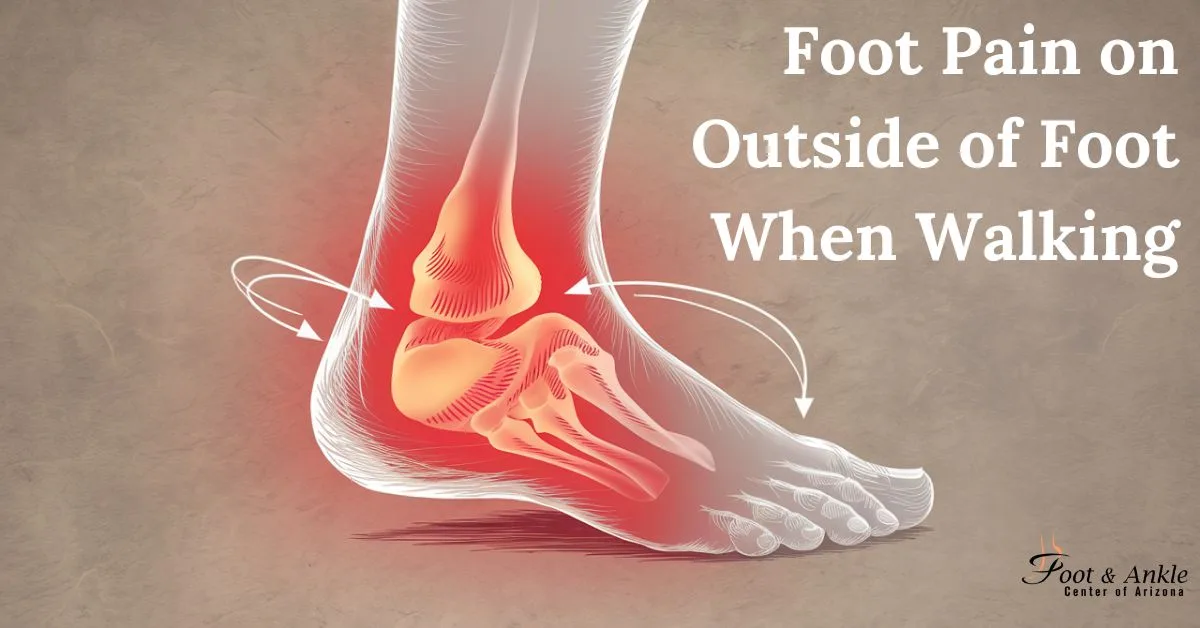
The human foot is a very complex structure, consisting of 26 bones, 30 joints, and over 100 muscles, tendons, and ligaments. Each of them holds an important place in providing stability, movement, and balance while walking. Lateral foot pain commonly involves injury to one or all of the following specific structures:
Damage, inflammation, or overuse of any of these parts can lead to pain on the outside of the foot, especially during walking.
Pain on the outside of the foot may be caused by a number of factors, all requiring correct identification for effective treatment. Here are some of the most common causes:
Peroneal tendonitis occurs due to the inflammation of a peroneal tendon as a result of overuse or repeated movement. The condition is commonly found in athletes or people involved with activities requiring frequent movements of the foot, such as running, jumping, and/or walking on uneven surfaces.
Stress fractures are tiny breaks in the bones. They are caused by the repetitive stress of actions, which is otherwise known as overuse. The most common area where such an injury takes place is along the 5th metatarsal, on the outside of the foot. These types of fractures usually build up over time and for the most part, the pain gets progressively worse, especially during walking or weight-bearing activities.
Cuboid syndrome is usually an injury or overuse that dislocates the cuboid bone, which then shifts out of alignment. This may highly cause pain on the outside of the foot, hence limiting mobility. It may make walking painful and uncomfortable.
Sprains of the ankle, but especially those with the participation of the lateral ligaments, give sharp pain over the foot or radiating laterally. A sprain is a stretching or tearing of the ankle ligaments that usually occurs when the ankle is twisted or rolled.
Arthritis-most often osteoarthritis-can also affect the joints on the outside of the foot. As cartilage wears down, the joints can become painful and inflamed. Pain from this may be accentuated by long walks or standing.
The tailor’s bunion, or bunionette, develops at the root of the 5th toe, which is also known as the pinky toe. It takes place with the movement of the bone outward, thereby resulting in a development of a hump on the exterior of the foot. Such misalignment can lead to pain, especially during walking.
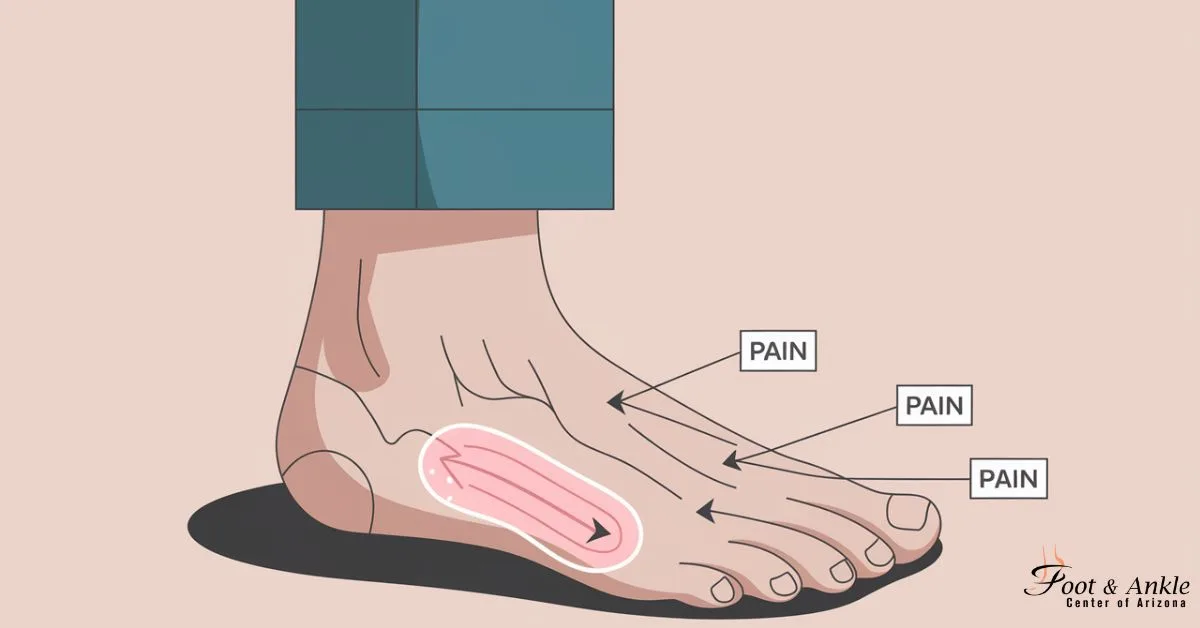
Foot pain on the outside can present itself in a variety of ways. Key symptoms include:
Lateral foot pain could give rise to changes in gait, which may be disabling and might lead to secondary problems with the knees, hips, or lower back.
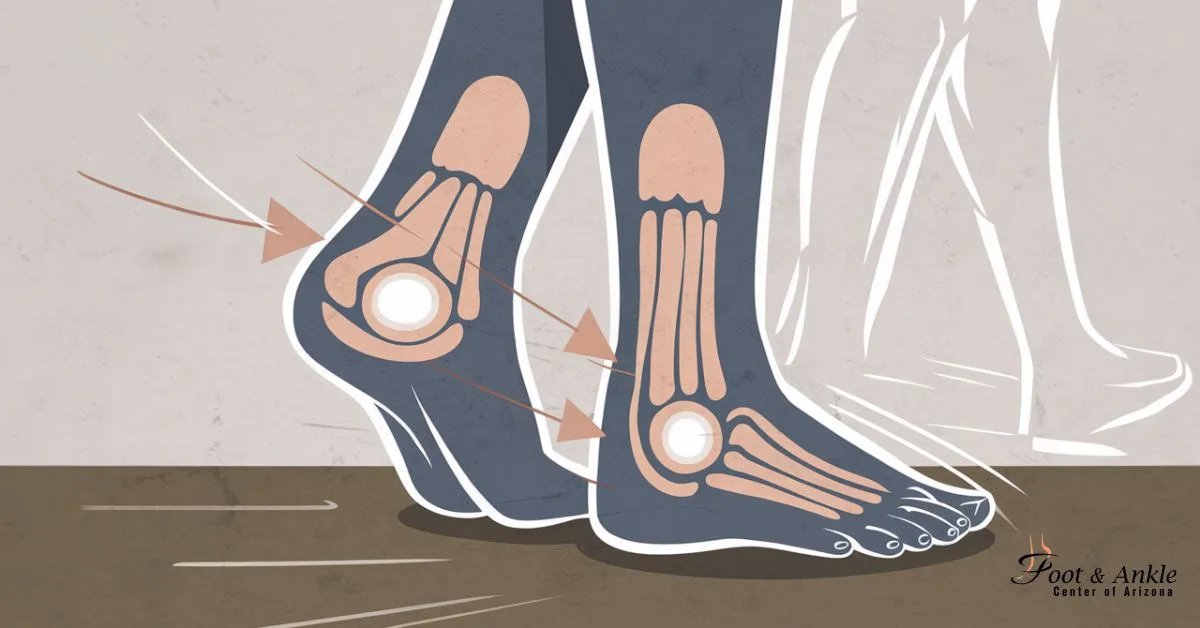
Walking is quite a complex process; your foot goes through different phases of motion as it moves. The instep or arch pain disrupts this natural gait cycle, which causes you to compensate by placing more pressure on other parts of your foot or body.
Accurately diagnosing foot pain is essential for treatment. Here’s how a healthcare professional typically diagnoses lateral foot pain:
Physical Examination A physician will offer a physical examination of the area of pain, looking out for any swelling or tenderness, and also enquire about your activity level. He/She may also test the range of motion in your foot and ankle.
These may be supplemented with X-rays, MRI, or CT scans if the doctor suspects a more serious problem, such as a stress fracture or cuboid syndrome. This can give a good detail of the bones and soft tissues and hence pinpoint the cause of pain.
A podiatrist might perform a gait analysis to observe how you walk, identifying any irregularities in the pattern of your locomotion that may cause or exacerbate the pain.
Once a diagnosis has been given then treatment may be allowed to begin. The right form of treatment depends on the cause of the pain, but common approaches include the following:
For injuries or diseases in the case of peroneal tendonitis, which might not be as serious resting along with icing may be prescribed. This is very important since it allows the foot to rest and minimize swelling.
Custom orthotics may be advised for providing additional support and cushion to relieve the pressure on the involved area. Wearing suitable shoes with a supportive structure can also avoid further aggravation.
Physical therapy helps strengthen the foot muscles improves flexibility and reduces inflammation. Therapists can teach you exercises for particular areas of your weakness or injury.
Over-the-counter nonsteroidal anti-inflammatory drugs (NSAIDs) such as ibuprofen, help to manage the pain and reduce inflammation. In more serious cases, a physician may prescribe more powerful medications.
For more serious instances of peroneal tendonitis, or in cases in which the pain is caused by a stress fracture, immobilization of the foot with a walking boot or brace may be required so the foot can heal properly.
Surgery is reserved for the most part, but it may be indicated in severe fractures, ligament tears, or cuboid syndrome when conservative treatments fail.
Though some foot injuries and conditions are inevitable, there are some things you can do to help reduce your risk of developing pain in the lateral foot. These include the following:
Wearing shoes that provide adequate support, considering your foot type and activity level, is paramount to preventing most problems with the feet. A firm sole, good arch support, and proper cushioning are what you need to look for in a pair of shoes.
Stretch and strengthen your foot and ankle regularly, especially if you participate in high-impact activities. This can prevent peroneal tendonitis. Add exercises to your program that strengthen the foot, particularly the outer foot.
If you are starting an exercise program or increasing your physical activity, do it gradually. Sudden increases in activity can lead to overuse injuries like stress fractures and tendonitis.
Carrying excess weight puts additional stress on the feet. Staying within a healthy weight range reduces the pressure on the foot and can prevent pains from occurring.
It’s important to consult a healthcare provider if you experience:
A professional evaluation can help identify the root cause of your pain and prevent more serious complications from developing.
The most prevalent ones are peroneal tendonitis, stress fractures, cuboid syndrome, ankle sprains, and arthritis.
Yes, injuries with inflammation will get further irritated by walking and result in taking more time than required to heal. Rest and proper treatment is necessary
Healing times can vary depending on the cause. In general, mild tendonitis or sprains can heal in a matter of weeks, while the healing process for stress fractures may take 6-8 weeks, if not longer.
Aching from the lateral side of the foot can be relieved by stretching exercises of the Achilles tendon and calf muscles, along with strengthening the peroneal muscles.
It is usually indicated for severe cases, such as when conservative treatment for either fractures or tendon injuries on their own has failed.
Pain on the outside of the foot when walking can be caused by several factors, ranging from mild tendonitis to serious conditions such as fractures or cuboid syndrome. Understanding the root of your pain is important in finding appropriate treatment and ways of preventing this in the future. Whether this is simple rest.