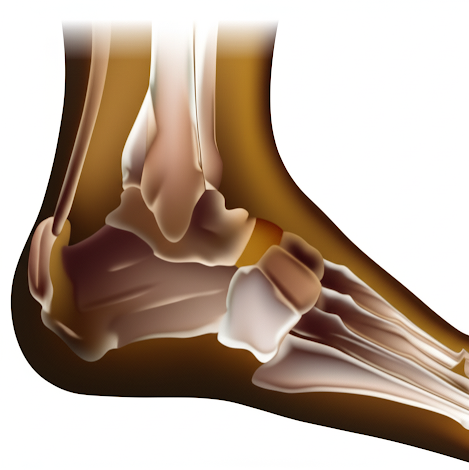
Haglund’s deformity is characterized by a bony protrusion at the heel’s rear. It leads to irritation of nearby soft tissue, specifically the Achilles tendon, when this growth rubs against footwear, which can result in bursitis, an inflamed bursa – a cushioning, fluid-filled sac located between bone and tendon.
This condition, also known as “pump bump,” is commonly associated with the pressure exerted by the stiff backs of pump-style shoes upon walking. Other shoes with rigid backs, like ice skates, men’s dress shoes, or women’s pumps, can also trigger this irritation.
Genetics can predispose individuals to Haglund’s deformity, particularly through inherited foot structures such as:
The deformity can manifest in one or both feet, with symptoms including:
A foot and ankle surgeon will assess symptoms and physically examine the foot. Typically, healthcare providers order X-rays to further evaluate the bone structure of the heel.
Nonsurgical methods aim to alleviate bursal inflammation but do not decrease bony enlargement. These methods may involve:
If nonsurgical treatments do not sufficiently alleviate pain, the patient may require surgery. The foot and ankle surgeon will determine the most appropriate surgical method and provide postoperative care instructions.
To minimize the risk of Haglund’s deformity recurring:
Podiatrists, DPMs, or foot and ankle doctors often refer to foot and ankle surgeons, who possess extensive education and training dedicated to foot and ankle care. They have expertise beyond other healthcare providers in this arena.
Foot and ankle surgeons handle a plethora of foot and ankle conditions, regardless of complexity, and cater to patients of all ages. They are proficient in various surgical procedures, including those potentially required for treating Haglund’s deformity.