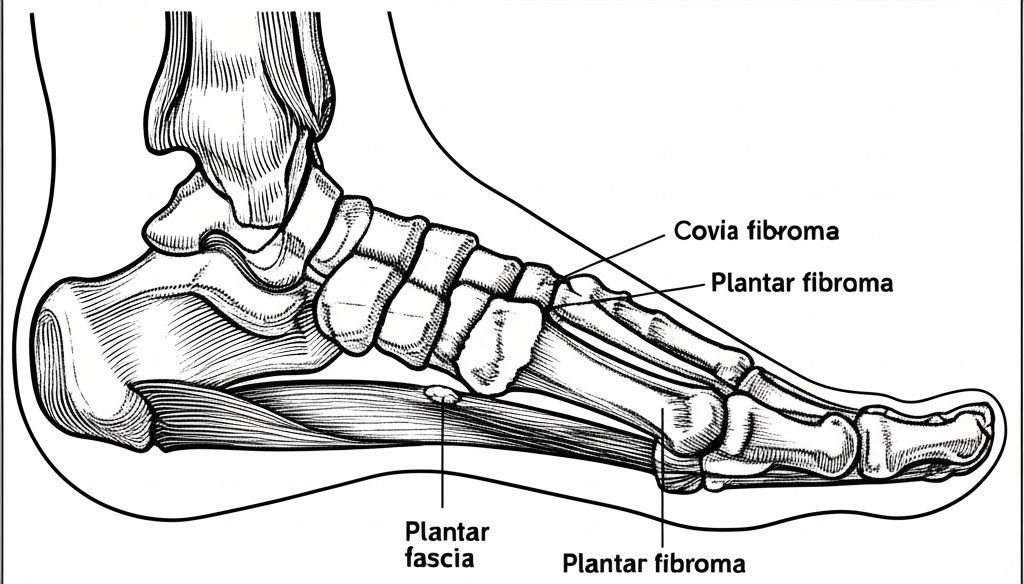
The hallmark of a plantar fibroma is a palpable lump in the arch of the foot, which is firm upon examination. The size of this nodule may be static or grow with time, and occasionally, more can appear.
Not everyone with a plantar fibroma will experience discomfort, but when they do, it’s usually the result of footwear irritation or weight-bearing activities.
A foot and ankle specialist will perform a physical exam, pressing on the nodule to determine its nature and if it causes pain radiating toward the toes. Imaging tests like an MRI or a biopsy may be conducted to assess further and confirm the diagnosis.
Nonsurgical:
Patients must seek a further assessment if the fibroma or pain increases.
Surgical:
Should nonsurgical methods not alleviate the issues, surgical excision of the plantar fibroma is an option. However, patients may face arch flattening or hammertoes post-surgery. Postoperative use of orthotic devices may be required for ongoing foot support. Recurrence is common, so continuous monitoring by a foot and ankle surgeon is recommended.
Foot and ankle surgeons are the foremost authorities in foot and ankle health. Their expertise as doctors of podiatric medicine (DPMs) extends to a specialized surgical focus on foot and ankle conditions. With rigorous training in this area, these professionals are well-suited to tackle complex issues, such as plantar fibromas, across all patient demographics. Their comprehensive background equips them with a variety of surgical interventions. Ensuring the finest care for conditions affecting the foot and ankle.
A plantar fibroma is a benign (noncancerous) lump that forms in the arch of the foot within the plantar fascia ligament. Its exact cause isn’t always known, but it may develop due to trauma, repetitive stress, or genetic predisposition.
Not always. Some people experience no pain, while others may feel discomfort when walking, standing, or wearing certain shoes due to pressure on the fibroma.
Plantar fibromas typically do not resolve without treatment. While symptoms may be managed with orthotics or physical therapy, the lump itself usually remains unless surgically removed.
Non-surgical treatments include custom orthotics to reduce pressure, corticosteroid injections to shrink the fibroma, and physical therapy. These options help manage pain and slow growth.
Surgery is considered when conservative treatments fail to relieve symptoms or the fibroma grows larger. However, surgery comes with risks, including arch flattening and recurrence.