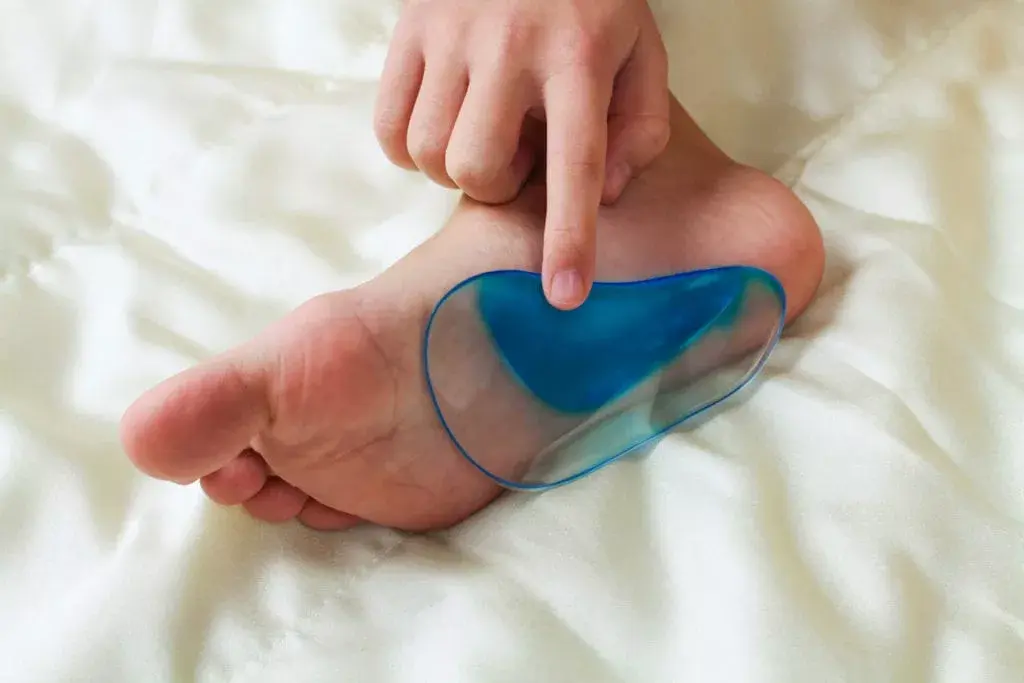
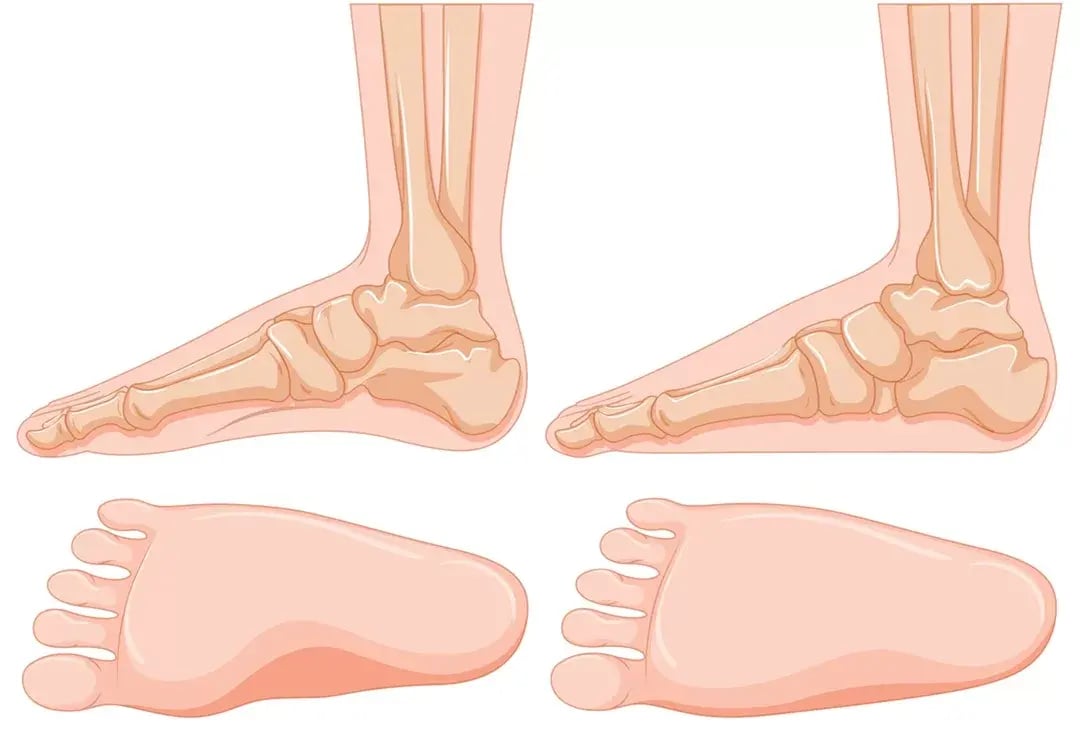
The term “fallen arches” often refers to a medical condition where an adult’s feet have flat arches. It’s important to differentiate this condition from similar flatfoot conditions that can manifest in younger individuals during their childhood or teenage years.
Underlying Causes of Fallen Arches
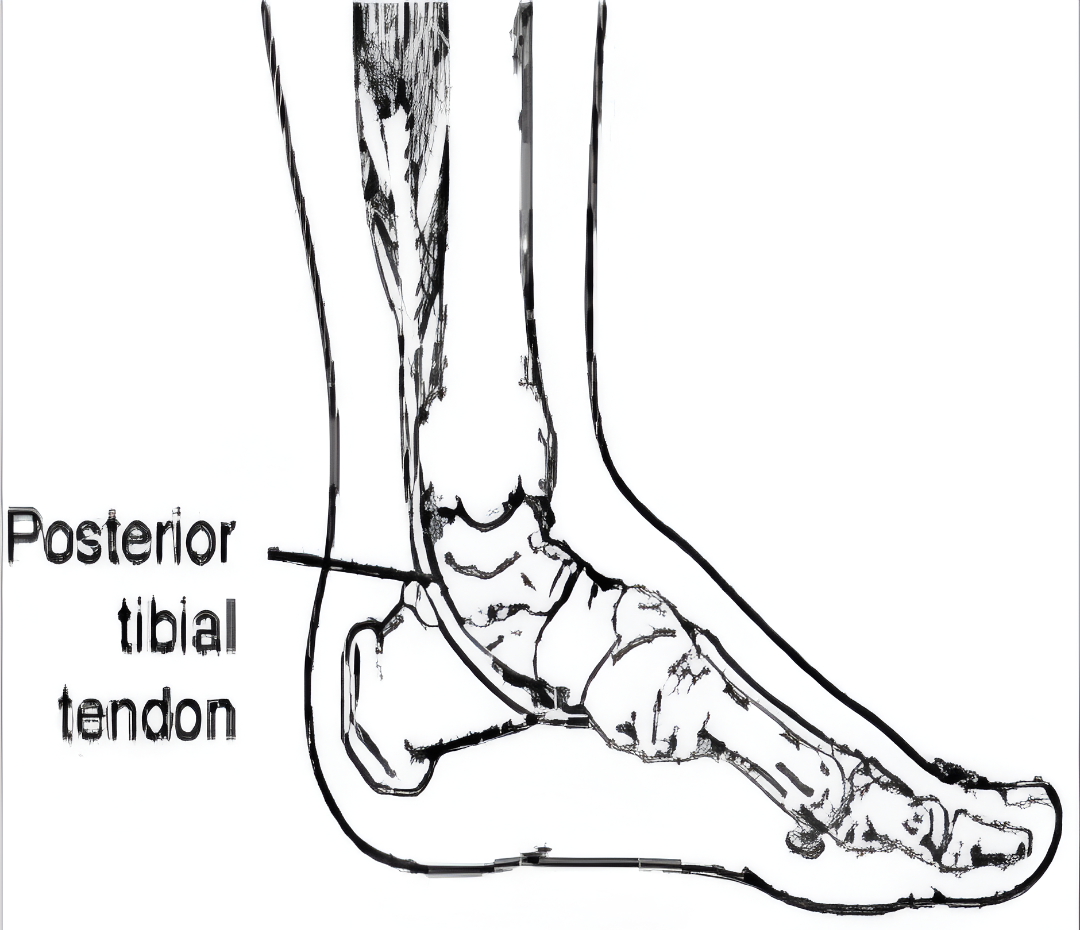
The slow knocking down of the foot’s arch, characterizing fallen arches, generally stems from issues within the posterior tibial tendon. When the posterior tibial tendon is subjected to damage or weakening, its ability to support the arch diminishes, and the arch starts to lower progressively over time. The alteration in the foot’s structure, as a result of the weakening arch, often gives rise to additional health concerns.
Common Health Issues Associated With Fallen Arches
Several health complications can arise as a consequence of fallen arches:
- Plantar Fasciitis: This painful condition involves inflammation of the plantar fascia—a thick band of tissue that runs across the bottom of your foot connecting the heel bone to the toes. Fallen arches can place more strain on the plantar fascia, potentially leading to this pain.
- Tendonitis: The inflammation or irritation of a tendon can occur with fallen arches due to increased stress on the tendons of the foot as they attempt to stabilize and support the compromised arch.
- Increased Fatigue: The lack of proper arch support can lead to overworking of the muscles in the foot and leg, which might result in a sensation of increased fatigue during standing, walking, or other activities that involve foot movement.
- Arthritis: The foot’s altered shape and undue stress on the joints can speed up the natural wear-and-tear process, potentially leading to arthritis in the foot and ankle, which results in joint pain and stiffness.
Addressing the Condition
Recognition of the symptoms associated with fallen arches is crucial for timely and effective intervention. Conservative treatments such as orthotic devices, physical therapy, and footwear modifications may be recommended to alleviate strain and enhance foot support. In certain cases, medical or surgical interventions may be necessary to correct the underlying issues with the posterior tibial tendon or other affected structures in the foot to restore proper arch function.
 March 26, 2025