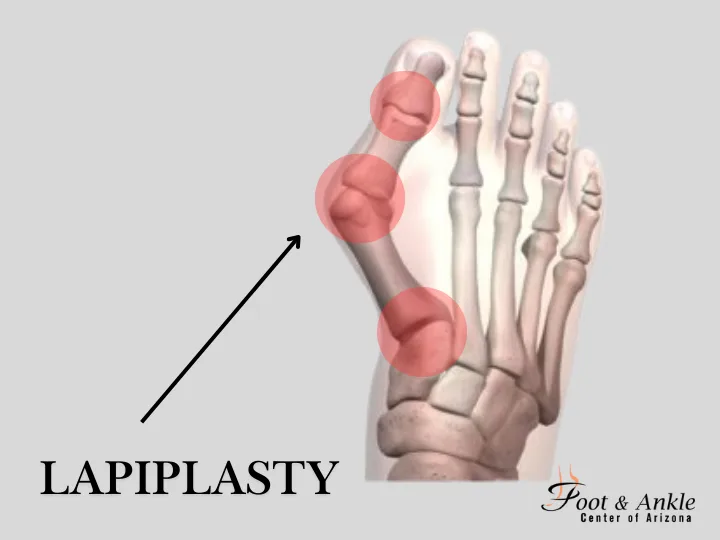
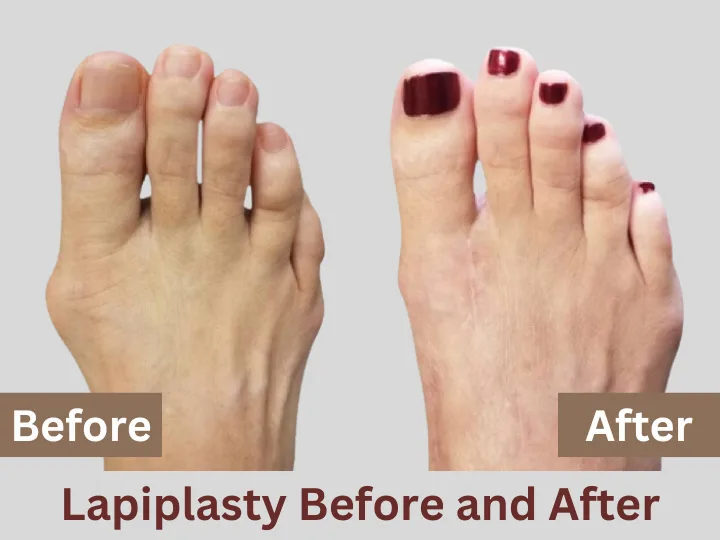
Bunions are a common foot disease that significantly affects daily life, causing pain and discomfort. As a leading solution for bunion correction, Lapiplasty has emerged as an innovative surgical option that not only addresses bunion symptoms but also their root causes. In this blog post, we’ll discuss what is Lapiplasty. how it compares to traditional surgical procedures, and what benefits it offers to patients suffering from bunions.
A bunion is the formation of a bony bump at the base of the big toe. This will cause angulation of the toe into the other toes, medically termed hallux valgus. In many people, this deformity will cause great discomfort, especially with shoes or athletic activities. Common symptoms associated with bunions include:
Genetics, arthritis, and poor shoe fitting are a few causes of bunions. When conservative treatments, such as changes in footwear or orthotic devices, fail to alleviate symptoms, surgical intervention may be necessary.
Traditional bunion surgery will commonly include toe bone realignment and removal of the bony prominence. While these work, they often have their disadvantages in terms of lengthier recovery times, pain, and the possibility of recurrence following surgery.
On the other hand, Lapiplasty bunion surgery is a modern surgery that restores the normal anatomy by correcting the root cause of the bunion. This is the underlying misalignment of the bones which Lapiplasty will set correctly to make the solution more stable and long-lasting.
What is Lapiplasty: Lapiplasty is one of the precise sorts of bunion surgery to correct the associated misalignment with bunions. Unlike the traditional methods that mainly address the bony bump, Lapiplasty addresses the whole structure of the first metatarsal bone and its alignment with the other bones in the foot. It is a technologically advanced treatment and a very much advanced technique, which guarantees precision and better results for the patient.
During the Lapiplasty surgery, the surgeon realigns the first metatarsal bone, which has shifted due to the bunion deformity, using proprietary instrumentation. The steps involved include:
Bunionplasty and Lapiplasty are often compared due to their shared goal of bunion correction, but they employ different techniques.
Choosing between these two options often depends on the specific needs of the patient and the severity of the bunion. Consulting with a qualified podiatrist, such as those at the Foot and Ankle Center of Arizona, can help determine the best approach for individual circumstances.
There are several advantages to opting for Lapiplasty over traditional bunion surgeries:
A lot of patients who undergo Lapiplasty have a shorter recovery period, as opposed to older methods. It is partly because of the minimal invasion the operation generally causes to the surrounding tissues.
Since Lapiplasty realigns bones and does not just remove the bony bump, many patients often face lesser pain levels after surgery. This can contribute to a more comfortable healing process.
Precision aligned, the Lapiplasty technique aligns the bones in their proper place, offering enhanced overall functioning of the foot. This may provide improved mobility and reduce the chances of bunions in the future.
Among the most prominent benefits of Lapiplasty are the long-term results it promises. Since Lapiplasty treats the source of the bunions, recurrence is less likely, thereby making it quite attractive to many patients.
This makes Lapiplasty an ideal procedure for patients with moderate-to-severe bunions and also for those patients whose conservative management has not relieved the symptoms. The best candidates usually are those with:
However, there are contraindications. For patients who have severe arthritis of the joint, infections, or other underlying health issues, this may not be indicated because the physician will assess whether Lapiplasty is suitable for the patient.
Recovery following Lapiplasty typically involves several stages:
The total recovery time can vary, but many patients can resume normal activities within a few weeks, depending on the specific details of their case.
Many people have shared their success stories after Lapiplasty at the Foot and Ankle Center of Arizona. One patient, for example, explained how their bunion had made it difficult for them to engage in their favorite pastimes, like hiking and sports. They were overjoyed to resume their busy lifestyle and noted a notable decrease in pain following Lapiplasty.
These endorsements highlight how Lapiplasty can improve a patient’s quality of life by enabling them to engage in daily activities without having to deal with bunion pain.
Lapiplasty is an advanced surgical procedure that corrects bunions by addressing the root cause: joint instability. Unlike traditional methods that remove only the visible bump, Lapiplasty realigns the metatarsal bone in three dimensions, providing more permanent relief and preventing recurrence.
Lapiplasty is different from traditional bunion surgery because it focuses on correcting the bunion in 3D and stabilizing the entire joint. Traditional surgery often involves simply shaving off the bump, which may not address underlying instability, while Lapiplasty works on fixing the root cause.
Recovery from Lapiplasty can be quicker and less restrictive than traditional surgery. Many patients are able to bear weight in a boot shortly after surgery, and return to normal shoes within a few weeks. High-impact activities may resume in a few months, depending on individual healing.
Lapiplasty has a high success rate due to its unique method of correcting bunions at their source. By stabilizing the joint in three dimensions, it provides a more durable correction, reducing the risk of bunion recurrence compared to traditional methods.
Lapiplasty is best suited for individuals with moderate to severe bunions, especially those with recurring issues. It’s ideal for patients who want a comprehensive, lasting solution that corrects the bunion deformity at its origin.
Lapiplasty represents a game-changing leap forward in the correction of bunions by fixing the root causes. Faster recoveries, less pain, and long-lasting results are advantages related to choosing Lapiplasty bunion surgery. If you are experiencing bunion deformity and seeking out your options for surgery, consider consultation with the Foot and Ankle Center of Arizona. Our team, led by Dr. Kris A. DiNucci, DPM, FACFAS, is dedicated to providing personal care and innovative treatment solutions.
Looking for Lapiplasty in Scottsdale, AZ? If so, then contact the Foot and Ankle Center of Arizona today to learn more about Lapiplasty and to schedule a consultation. Let us help you regain your mobility and an improved quality of life with effective solutions for bunions.